
“I’m genuinely so grateful that I came across this clinic and more importantly found Dr. Revati. I had been struggling with persistent dental pain for almost a month and despite consulting elsewhere, the underlying issue wasn’t diagnosed correctly. I eventually came here and was told that both of my affected teeth had two canals each; something that had been missed earlier. Finally having the right diagnosis made all the difference.”
Root canal treatment
Root Canal Treatment in Kondapur, Hyderabad
A tooth that throbs at night, hurts when you bite, or stays sensitive to hot and cold for more than a few seconds is often telling you that the soft tissue inside it, called the pulp, is inflamed or infected. Left alone, the infection can spread to the bone and gum around the tooth.
Elite Dental Clinic is a dental clinic in Kondapur, Hyderabad, where Dr. Revathi Indukuri, an endodontist with an MDS in conservative dentistry and endodontics, treats root canals. This page explains how root canal treatment works, when it is not the right choice, how your plan is set and what to expect at each visit.
- Chair time
- 1 to 2 hours
- Visits
- 1 to 3
- Anaesthesia
- Local
- Open
- Every day
Open every day from 9:00 am to 9:00 pm. If you have pain or swelling, call or send a WhatsApp message before you come so your visit can be planned.
Medically reviewed by Dr. Revathi Indukuri, BDS, MDS (Conservative Dentistry & Endodontics). Last reviewed . About the reviewer
Quick answer
Root canal treatment removes the inflamed or infected pulp from inside a tooth, then cleans, seals and restores the tooth so it can stay in your mouth. At Elite Dental Clinic in Hyderabad, it takes one to three visits, and your plan is set after an evaluation.
01 Overview
What is root canal treatment and how does it save a tooth?
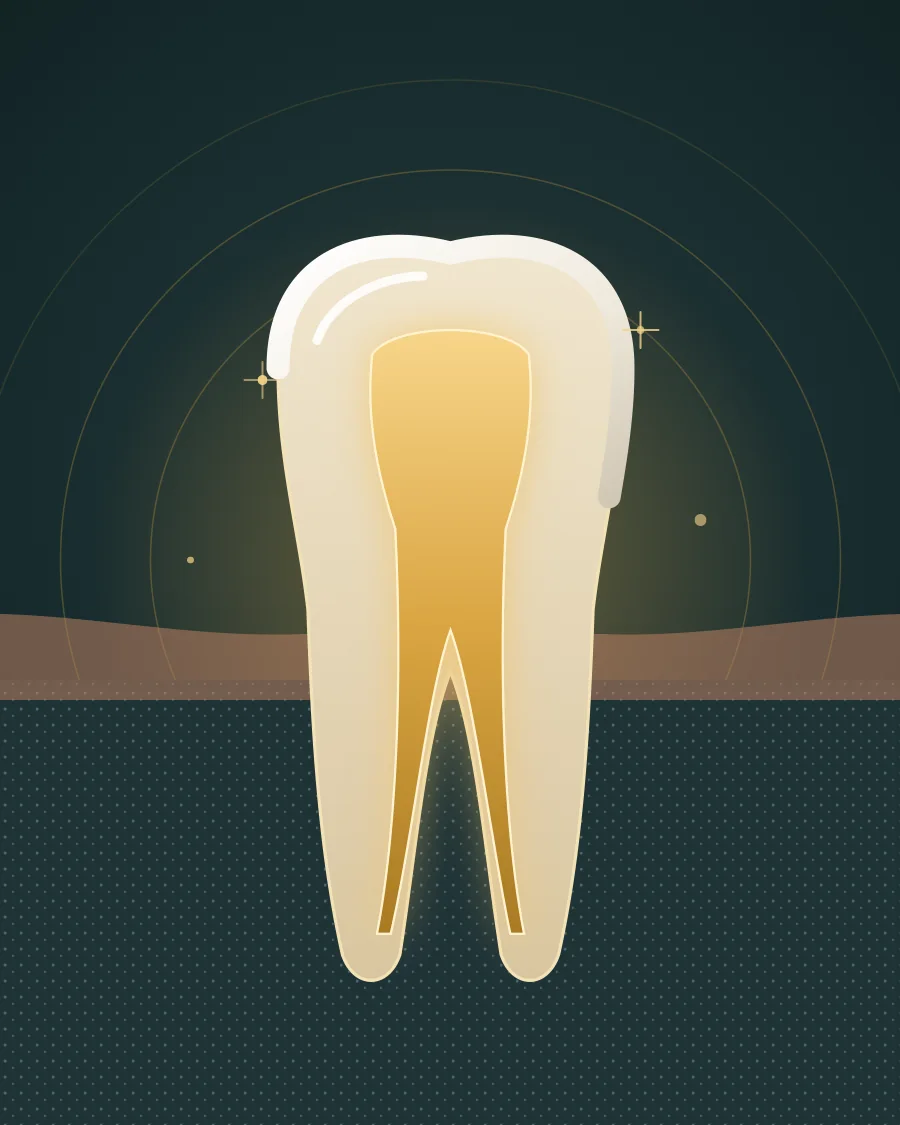
Every tooth has a soft centre called the pulp. It holds nerves and blood vessels, and it runs down thin channels inside the roots called root canals. When deep decay, a crack or repeated dental work lets bacteria reach the pulp, it becomes inflamed and can die and become infected. That is when a tooth starts to ache, swell or darken.
Root canal treatment, also called root canal therapy or endodontic treatment, removes the damaged pulp, then cleans, shapes, disinfects and seals the canals. The tooth is then restored with a filling or a crown.1
The alternative most patients compare it with is taking the tooth out. The NHS notes that an infected tooth that is not treated may need to be taken out.1 Extraction ends the infection, but it leaves a gap, and replacing that gap later may mean a dental implant or a bridge. A root canal keeps your own tooth, with its root still in the jaw.
Pain can fade when the nerve dies, but the infection stays. A tooth that has stopped hurting after a long toothache still needs to be checked.
In short, root canal treatment clears the infection inside the tooth so that the tooth itself can stay.
02 Candidacy
Who needs root canal treatment in Kondapur?
A dentist decides after an examination and an X-ray, because pain alone does not show how deep the problem goes. The two lists below describe the general pattern.
Signs a tooth may need it
- A lasting toothache, especially when you bite or at night
- Sensitivity to hot or cold that stays for more than a few seconds
- Swelling of the gum near the tooth, or a small pimple on the gum
- A tooth that has darkened, or deep decay or a crack that reaches the pulp
Needs caution or a different plan
- A crack that runs down into the root, which a root canal cannot repair
- Too little healthy tooth left to hold a filling or crown
- Advanced gum disease with a loose tooth, where the bone support has been lost
- Diabetes or other conditions that slow healing, which need planning with your physician
The condition of the tooth, and not the pain alone, decides whether a root canal makes sense.
03 Options
Which root canal option fits your tooth in Kondapur?
The right plan depends on the tooth, the infection and whether the tooth has been treated before. Whichever plan is chosen, the tooth then needs a filling or a crown to seal it. Baby and young teeth are treated differently, see root canal for children.
Single-visit root canal
For a tooth with a limited infection and no swelling, where the canals can be cleaned and sealed in one longer sitting.
1 visit, then the final filling or crown
Two-visit root canal
For a tooth with swelling, a larger infection or narrow canals. Medicine is placed in the canals and the tooth is sealed at the second visit.
2 visits, then the final filling or crown
Re-treatment of an earlier root canal
For a tooth that was treated before and still hurts or shows infection on the X-ray. The old filling is removed and the canals are cleaned again.
2 visits or more
A Cochrane review of 25 trials found no evidence that a single visit heals better than several visits, and more people reported pain in the first week after a single visit.3 The dentist chooses between the two plans from what the X-ray and the examination show.
| Compared on | Root canal | Extraction |
|---|---|---|
| Keeps your own tooth | Yes | No |
| Leaves a gap to replace later | No | Yes |
| Needs enough healthy tooth to restore | Yes | No |
| Typical visits | 1 to 3, plus the final filling or crown | 1, then healing time |
A root canal saves the tooth when it can be restored, and extraction is the better choice when it cannot.
04 Procedure
How is a root canal treated, step by step?
Each visit usually lasts 1 to 2 hours, and a back tooth or a single-visit plan can take longer.1 You are told the plan for your tooth at the first visit.
The tooth is cleaned from the inside first and sealed from the outside last.
Examination and X-ray of the infected tooth
The dentist asks about your pain, tests the tooth with cold or by tapping, checks the gum and takes an X-ray to see the roots and the bone around them. You are told what was found and what the options are.
Opening the tooth to reach the pulp
A small opening is made in the biting surface of a back tooth, or the back of a front tooth, to reach the pulp chamber.
Cleaning and shaping the root canals
Fine instruments remove the damaged pulp and shape each canal, and a disinfecting liquid washes the canals as they are shaped. Back teeth have more canals than front teeth, so they usually take longer. A dental operating microscope, which magnifies the inside of the tooth, makes it easier to find a narrow or hidden canal.
Sealing the canals with a root filling
Once the canals are clean and dry, they are filled and sealed so that bacteria cannot return. In a two-visit plan, medicine is placed in the canals first and the tooth is closed with a temporary filling until the next visit.
Final filling or crown after the root canal
A filling or a crown, a cap that covers the whole tooth, seals the opening. The NHS notes a crown may be needed if the tooth was badly infected.1 The final seal should not be left for long, because a temporary filling is not meant to last. A review visit checks healing.
05 Cost
What decides the cost of root canal treatment in Kondapur, Hyderabad?
Treatment is planned for one person, not sold as a product, so the cost follows your evaluation.
Two patients with a toothache can need very different care. For that reason Elite Dental Clinic does not quote a cost before an evaluation. You receive a written plan that lists each stage before any treatment starts.
What the evaluation looks at
- Which tooth it is, because back teeth have more canals than front teeth
- How far the infection has spread, as shown on the X-ray
- Whether the tooth was root treated before and needs re-treatment
What you decide with the dentist
- Whether a single-visit or two-visit plan suits the tooth
- The final seal the tooth needs, a filling or a crown, and the crown material
- The timing of each visit around your work and travel
Your medical history matters too, including how well conditions such as diabetes are controlled.
The cost follows the plan, and the plan follows the evaluation.
06 Aftercare
What does recovery after a root canal look like?
Most people return to normal activity the same day or the next day. The tooth and the gum around it can stay sore and a little swollen for a couple of weeks.1 Your dentist will confirm the steps for your own tooth.
First 48 hours
The area stays numb for a few hours, so wait to eat until the feeling returns. Soreness is common. Take only the medicines your dentist prescribes, and avoid biting hard on the tooth.
Week 1
Chew on the other side and avoid hard or sticky food. The soreness should ease each day. Brush and floss as usual, gently around the tooth.
Weeks 2 to 6
Return for the final filling or crown when your dentist advises, and attend the review visit. A temporary filling is not meant to last.
Long term
Care for the tooth as you do the others: brush twice a day, floss daily and attend regular check-ups. Healing is checked on X-ray over the following months.
When to call us
Call the clinic the same day if swelling keeps growing after the second day, you have a fever, pain gets worse instead of easing after 2 to 3 days, your bite feels too high, or the temporary filling comes out. If swelling spreads to your eye or neck, or you have trouble breathing or swallowing, go to the nearest hospital emergency department.
Soreness settles in days, healing takes months, and the final seal protects both.
07 Limits
When is a root canal not the right choice?
Root canal treatment is usually not advised in these situations, and extraction or another plan is discussed instead:
- A vertical crack that runs into the root, because the crack cannot be sealed.
- Too little healthy tooth left to be restored with a filling or crown.
- Advanced gum disease with loss of bone support, where the tooth is loose.
- A plan that leaves out the final filling or crown, because an unsealed tooth can be infected again.
- Canals that cannot be cleaned fully, for example because of a blockage or a broken instrument. A different approach or a referral may be planned.
- Medical conditions that delay healing, until your physician has reviewed them.
If the tooth cannot be saved, a dental implant is one way to replace it.
Risks and complications
The main risks are pain or swelling in the first days, a canal that is missed or cannot be cleaned fully, an instrument that breaks inside a canal, an infection that stays or returns, and a tooth that cracks later if it is not restored well. Pain in the first week is reported more often after a single visit than after several visits.3
In a review of 63 studies, between 68 and 85 out of 100 root treated teeth showed complete healing on X-ray at least a year later, when judged by the strict standard.2 A tooth that does not heal fully can be assessed again, and re-treatment or extraction is then discussed.
A root canal only helps when the tooth can be sealed and restored afterwards.
08 Your visit
What happens at your first root canal appointment in Kondapur?
At the first visit Dr. Revathi Indukuri listens to your history, examines the tooth and the gum, tests the tooth and reviews an X-ray. If the tooth needs treatment, you are told the plan, the number of visits and what each stage involves. You receive a written plan that lists each stage before any treatment starts.
Bring any earlier dental X-rays or reports, and a list of your medicines. Tell the dentist about conditions such as diabetes, heart problems or allergies, and whether you take blood thinners.
The team speaks English, Telugu and Hindi. If you have a dental emergency such as swelling or severe pain, call or send a WhatsApp message before you come, so that your visit can be planned. You are under no obligation to go ahead with treatment.
The first visit ends with a plan, not a commitment.
09 Why this clinic
Why choose Elite Dental Clinic for root canal treatment in Kondapur?

Dr. Revathi Indukuri
BDS, MDS (Conservative Dentistry & Endodontics)
BDS, Sree Sai Dental College Research Institute, 2009
MDS, Dr. NTR University of Health Sciences, Andhra Pradesh, 2016
A toothache is not always the tooth that looks worst on the X-ray, so I take time to find the cause first and explain it in plain words. Then we go step by step, at your pace, and you know what to expect before each stage.
Dr. Revathi Indukuri
Dr. Revathi Indukuri completed her MDS in conservative dentistry and endodontics, the branch of dentistry that deals with the pulp and the root canals of a tooth. Root canal treatment is part of that training, and it is the treatment she is asked about most often by patients with tooth pain.
An endodontist treats the tooth
Root canal treatment is carried out by a dentist whose postgraduate degree is in endodontics.
One-visit and two-visit plans
The plan is matched to the tooth. Single-sitting root canal treatment is available where the tooth and the infection allow it.
A written plan before treatment
You receive a written plan that lists each stage before any treatment starts, so you know what comes next.
A dental operating microscope
The clinic has a dental operating microscope, which magnifies the tooth so that narrow or hidden canals are easier to see.
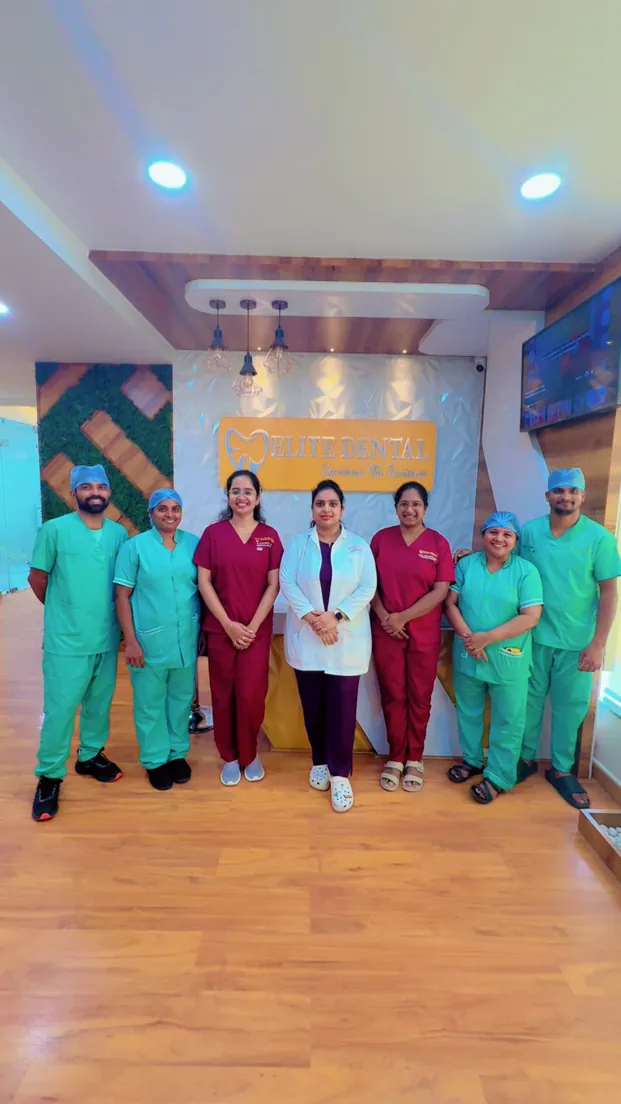
An endodontist, a plan matched to the tooth and a written plan before treatment are what this clinic stands behind.
10 Reviews
Patient reviews of Elite Dental Clinic in Kondapur
Recent patient reviews of Elite Dental Clinic
“Have a smooth experience in root canal and they have also done a regular follow up upon your section have done .”
“Had a good experience at this dental clinic. The staff was friendly and helpful, and the dentist explained the treatment clearly. The clinic was clean and the overall experience was comfortable. Would recommend this clinic for dental care.”
11 Visit us
Dentist in Kondapur, Hyderabad: location, hours and access
Elite Dental Clinic
2nd floor, Artham's Arcade, above Vijaya Diagnostics
Kondapur, Raghavendra Colony, Gachibowli
Hyderabad, Telangana 500084
070320 78789
Kondapur, Raghavendra Colony, Gachibowli
Hyderabad, Telangana 500084
070320 78789
| Monday to Sunday | 9:00 am to 9:00 pm |
|---|
The clinic is on the second floor of Artham's Arcade, above Vijaya Diagnostics, in Raghavendra Colony.
Patients looking for a root canal dentist in Kondapur will find the clinic above Vijaya Diagnostics in Artham's Arcade, Raghavendra Colony. Languages spoken: English, Telugu and Hindi. More about the clinic: dentist in Kondapur.
The clinic is on the second floor above Vijaya Diagnostics and is open every day from 9:00 am to 9:00 pm.
12 Travelling patients
Root canal treatment in Hyderabad for patients from other cities and countries
If you live outside Hyderabad, or you are visiting, a root canal can be planned around a short stay. Connect with the clinic on WhatsApp or by phone before you travel, and the team will help you plan your visit. Send a photo of your X-ray if you have one.
Some teeth can be treated in a single longer visit, which keeps the number of trips down. A tooth that needs two visits, or a crown afterwards, needs more days. The dentist explains the plan at the evaluation, so you can match it to the length of your stay.
Ask for your X-rays and a copy of your treatment record before you leave, so that a dentist at home can continue your care. The clinic is open every day from 9:00 am to 9:00 pm, and the team speaks English, Hindi and Telugu.
Plan the evaluation first, and the number of visits will follow from the tooth.
13 Questions
Root canal questions from patients in Kondapur
Is root canal treatment painful?
The tooth is numbed with a local anaesthetic, so you should feel pressure but not sharp pain during treatment. The tooth and gum can stay sore for a few days and sometimes up to a couple of weeks afterwards. Take only the medicines your dentist prescribes, and call the clinic if the pain gets worse instead of easing.
How many visits does a root canal take?
Usually one to three visits, and each visit lasts about 1 to 2 hours. A tooth with a limited infection can often be treated in a single longer visit. A tooth with swelling or a larger infection may need two visits. A further visit for the final filling or crown may follow.
Is a single-sitting root canal as good as a two-visit one?
A Cochrane review of 25 trials found no evidence that either approach heals better than the other. More people reported pain in the first week after a single visit. The dentist chooses the plan from the examination and the X-ray, and explains why before treatment starts.
Do I need a crown after a root canal?
Not always. A crown, which is a cap that covers the whole tooth, may be needed if the tooth was badly infected or has lost a lot of its structure. The dentist decides after seeing how much healthy tooth is left. A temporary filling should not be left in place for long.
How is the cost of root canal treatment decided?
Treatment is planned for one person and one tooth, so the cost is given after the evaluation. The tooth, the number of canals, how far the infection has spread, any earlier treatment and the final filling or crown all change the plan. You receive a written plan before treatment starts.
What happens if I do not get a root canal?
An infected tooth does not heal on its own. The infection can spread to the gum and the bone around the tooth and cause swelling. The NHS notes that an infected tooth that is not treated may need to be taken out. Pain can fade when the nerve dies, but the infection stays.
How long does a root treated tooth last?
No one can promise a fixed number of years. In a review of 63 studies, between 68 and 85 out of 100 root treated teeth showed complete healing on X-ray at least a year later, by the strict standard. A well sealed tooth that is cleaned daily and checked regularly is more likely to last.
What are the signs that I need a root canal?
A lasting toothache, pain when you bite, sensitivity to hot or cold that stays for more than a few seconds, swelling or a pimple on the gum, and a darkening tooth are common signs. Some teeth cause no pain at all. Only an examination and an X-ray can show whether a root canal is needed.
14 Second opinion
Want a second opinion on your root canal plan?
If you have been told you need a root canal or an extraction, bring your X-ray and any written plan to your evaluation. The dentist will go through them with you and explain the options in plain words. Call or send a WhatsApp message to book your visit. The evaluation is the first step, and you are under no obligation to go ahead with treatment.
15 Related
Treatments often considered alongside root canal treatment
Dental crowns
The usual way to restore a root treated tooth that has lost a lot of its structure.
Dental implants
An option to replace a tooth that cannot be saved with a root canal.
Tooth pain
For a toothache whose cause is not yet known, before a root canal is decided.
Sources
- Root canal treatment, NHS
- Outcome of primary root canal treatment: systematic review of the literature, Part 1. Effects of study characteristics on probability of success, International Endodontic Journal, 2007
- Single versus multiple visits for endodontic treatment of permanent teeth, Cochrane Database of Systematic Reviews, 2016
- Quality guidelines for endodontic treatment: consensus report of the European Society of Endodontology, International Endodontic Journal, 2006
This page is general information, not a diagnosis or a substitute for an examination, and results vary between patients.