


As a parent, you want your child to have a healthy, confident smile. But sometimes, dental problems begin quietly. A child may not complain about pain, and their teeth may look “normal” at first glance. However, small warning signs can point to bigger orthodontic issues developing beneath the surface.
This is where kids dental care in Kondapur becomes important. Early orthodontic care can help identify problems with tooth alignment, jaw growth, bite development, and facial balance before they become more difficult to treat.
Braces are not only about creating a straight smile. They can also improve chewing, speaking, oral hygiene, and long-term dental health. Knowing the early signs your child may need braces can help you take action at the right time.
Why Early Orthodontic Evaluation Matters
Many parents believe braces are only needed during the teenage years. While many children do get braces between ages 10 and 14, orthodontic problems can often be detected much earlier.
The American Association of Orthodontists recommends that children have their first orthodontic checkup around age 7. At this age, a mix of baby teeth and permanent teeth allows an orthodontist to see how the bite and jaw are developing.
Early evaluation does not always mean your child needs braces right away. Sometimes, the orthodontist simply monitors growth. In other cases, early treatment can prevent more serious problems later.
Benefits of early orthodontic evaluation include:
-
Detecting jaw growth problems early
-
Creating space for crowded permanent teeth
-
Reducing the risk of impacted teeth
-
Correcting harmful oral habits
-
Improving bite function
-
Making future treatment shorter or simpler
Common Signs Your Child May Need Braces
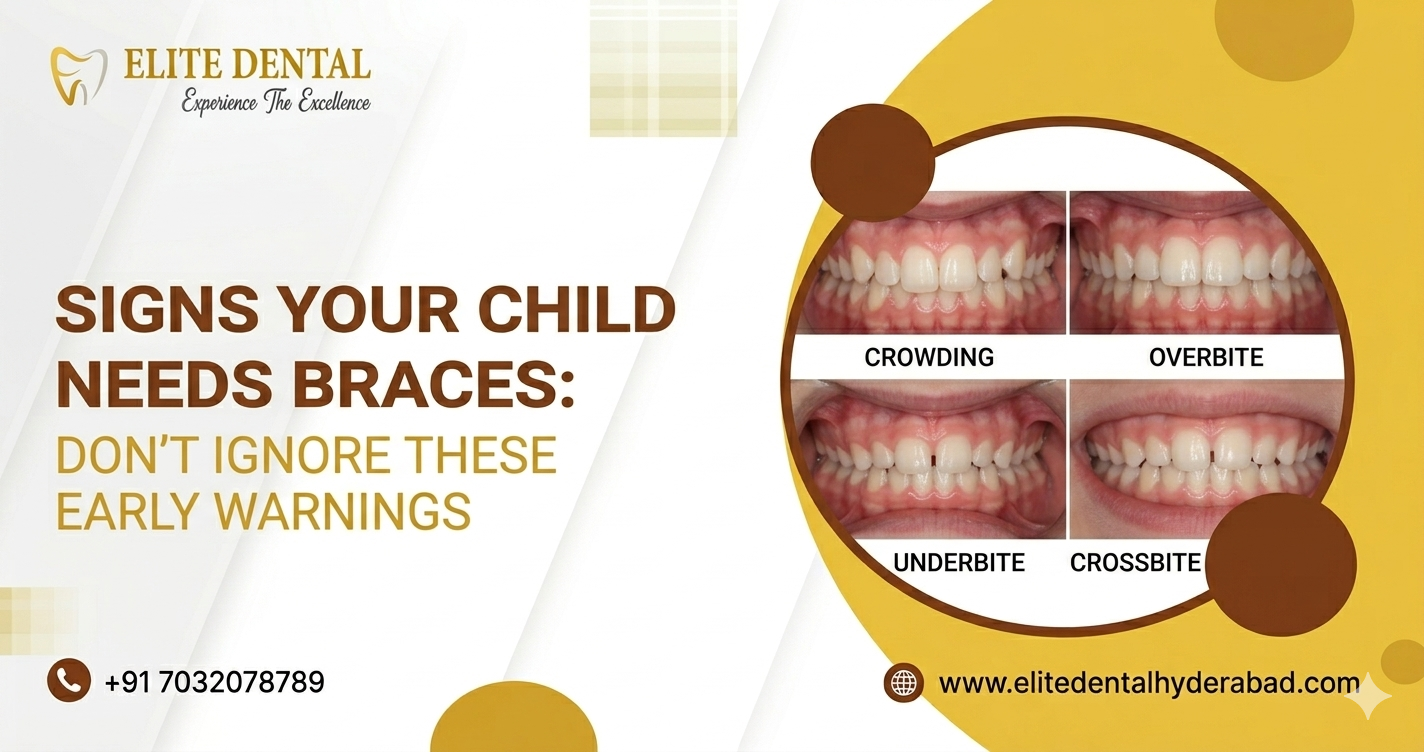
1. Crowded or Overlapping Teeth
Crowding is one of the most common signs that a child may need braces. It happens when there is not enough space in the mouth for all the teeth to fit properly.
You may notice teeth that:
-
Overlap each other
-
Grow in crooked
-
Rotate sideways
-
Appear squeezed together
-
Make brushing and flossing difficult
Crowded teeth can trap food and plaque, increasing the risk of cavities and gum problems. Children may also struggle to clean between tight teeth, even with good brushing habits.
Through orthodontics for kids, an orthodontist can evaluate whether the jaw has enough room for permanent teeth. Braces or other orthodontic appliances may help guide teeth into better positions.
2. Large Gaps Between Teeth
Small gaps in baby teeth are often normal. In fact, spacing can be helpful because permanent teeth are larger than baby teeth. However, large or unusual gaps may be a sign of an orthodontic issue.
Gaps may occur because of:
-
Missing teeth
-
Small teeth
-
Jaw size differences
-
Thumb sucking habits
-
Tongue thrusting
-
Extra space between upper front teeth
Some gaps close naturally as permanent teeth come in. Others may need treatment if they affect bite alignment or smile appearance.
An orthodontist can determine whether the spacing is normal for your child’s age or whether braces may be needed in the future.
3. Early or Late Loss of Baby Teeth
Baby teeth act as guides for permanent teeth. If they fall out too early or stay in too long, they can affect how adult teeth come in.
Early tooth loss may happen because of cavities, injury, or extraction. When a baby tooth is lost too soon, nearby teeth may shift into the empty space. This can block the permanent tooth from erupting correctly.
Late loss of baby teeth can also cause problems. If baby teeth remain in place too long, permanent teeth may erupt in the wrong direction or become impacted.
Warning signs include:
-
Permanent teeth coming in behind baby teeth
-
Baby teeth not loosening at the expected age
-
One side of the mouth developing differently than the other
-
Adult teeth appearing blocked or crooked
Early orthodontic care can help protect space and guide proper eruption.
4. Overbite
An overbite happens when the upper front teeth overlap the lower front teeth too much. A slight overbite is normal, but a deep overbite may cause problems.
Signs of a deep overbite include:
-
Lower teeth biting into the roof of the mouth
-
Upper teeth covering most of the lower teeth
-
Excessive wear on front teeth
-
Jaw discomfort
-
Difficulty biting certain foods
If left untreated, a severe overbite may contribute to enamel wear, gum irritation, and jaw strain.
Braces can help reposition the teeth and improve bite balance. In growing children, orthodontic treatment may also guide jaw development.
5. Underbite
An underbite occurs when the lower teeth sit in front of the upper teeth when the mouth is closed. This may be caused by jaw growth differences, tooth position, or genetics.
An underbite can affect:
-
Chewing ability
-
Speech clarity
-
Jaw comfort
-
Facial balance
-
Tooth wear
Underbites are important to evaluate early because they may become more difficult to correct as a child grows. In some cases, early orthodontic treatment can help guide jaw growth and reduce the need for more complex treatment later.
6. Crossbite
A crossbite happens when some upper teeth sit inside the lower teeth instead of outside them. It can affect the front teeth, back teeth, or both.
Common signs include:
-
Teeth not fitting together evenly
-
Jaw shifting to one side when biting
-
Uneven tooth wear
-
Facial asymmetry
-
Difficulty chewing on one side
Crossbites should not be ignored. If untreated, they may affect jaw growth and cause long-term bite problems. Early treatment may involve braces, expanders, or other orthodontic appliances.
7. Open Bite
An open bite means the upper and lower teeth do not touch when the mouth is closed. This often affects the front teeth, leaving a visible gap.
An open bite may be linked to:
-
Thumb sucking
-
Pacifier use beyond the toddler years
-
Tongue thrusting
-
Mouth breathing
-
Jaw growth patterns
Children with open bites may have trouble biting into foods like apples, sandwiches, or pizza. They may also develop speech issues, especially with certain sounds.
Orthodontic treatment can help close the bite and improve function, especially when addressed early.
Behavioral and Functional Warning Signs
Difficulty Chewing or Biting Food
If your child avoids certain foods, chews slowly, or complains that biting feels uncomfortable, their teeth may not be meeting properly.
You may notice your child:
-
Chews mostly on one side
-
Takes a long time to finish meals
-
Avoids hard or chewy foods
-
Bites the inside of the cheeks often
-
Struggles to bite into front-facing foods
These issues may point to bite misalignment. Braces can improve how the teeth fit together, making eating easier and more comfortable.
Mouth Breathing
Mouth breathing can sometimes be connected to jaw development and facial growth. While allergies or nasal issues may also cause it, chronic mouth breathing should be evaluated.
Signs include:
-
Sleeping with the mouth open
-
Dry lips
-
Bad breath
-
Snoring
-
Long facial appearance
-
Difficulty keeping lips closed
Mouth breathing may influence how the upper jaw develops and how teeth align. An orthodontist may work with a pediatric dentist, ENT, or pediatrician to identify the cause.
Thumb Sucking or Pacifier Use After Age 4
Thumb sucking and pacifier habits are common in young children. However, if these habits continue for too long, they can affect tooth and jaw development.
Long-term sucking habits may lead to:
-
Open bite
-
Narrow upper jaw
-
Protruding front teeth
-
Speech issues
-
Bite imbalance
The intensity and frequency of the habit matter. A child who sucks their thumb strongly for many hours a day is more likely to develop orthodontic problems.
Early guidance can help stop the habit and reduce future treatment needs.
Speech Problems
Not all speech problems are caused by tooth alignment, but some may be linked to bite issues. Teeth, tongue, lips, and jaw position all play a role in forming sounds.
Orthodontic problems may contribute to:
-
Lisping
-
Trouble pronouncing certain letters
-
Tongue thrust speech patterns
-
Difficulty with “s,” “z,” “t,” or “d” sounds
If your child has speech concerns along with visible bite issues, an orthodontic evaluation may be helpful.
Visible Smile and Jaw Development Signs
Protruding Front Teeth
If your child’s upper front teeth stick out noticeably, they may be at higher risk of dental injury. Protruding teeth are more exposed during falls, sports, or playground accidents.
This may be caused by:
-
Thumb sucking
-
Jaw growth imbalance
-
Crowding
-
Genetics
-
Bite problems
Braces can help move protruding teeth into a safer and more attractive position. Early treatment may be recommended if the teeth are very prominent.
Jaw Shifting, Clicking, or Popping
A child’s jaw should open and close smoothly. If the jaw shifts to one side, clicks, pops, or locks, this may indicate bite or jaw joint concerns.
Signs to watch for include:
-
Jaw moving sideways when opening
-
Clicking sounds while chewing
-
Complaints of jaw pain
-
Headaches
-
Trouble opening wide
-
Uneven bite
These symptoms should be evaluated carefully. Orthodontic treatment may help improve bite alignment and reduce strain on the jaw.
Teeth That Do Not Meet Properly
When your child closes their mouth, the upper and lower teeth should fit together in a balanced way. If teeth do not touch properly, chewing and speech may be affected.
Watch for:
-
Front teeth not touching
-
Back teeth not meeting
-
One side biting before the other
-
Teeth hitting awkwardly
-
Uneven wear patterns
A poor bite can worsen over time, especially as permanent teeth erupt. Early orthodontic assessment helps identify the best timing for treatment.
Oral Health Signs That May Point to Braces
Frequent Cavities or Gum Problems
Crooked or crowded teeth are harder to clean. Even if your child brushes daily, tight spaces and overlapping teeth can hold plaque.
This may lead to:
-
Cavities between teeth
-
Red or swollen gums
-
Bleeding while brushing
-
Bad breath
-
Tartar buildup
Braces can improve tooth position, making oral hygiene easier in the long run. However, children with braces must also maintain excellent brushing and flossing habits during treatment.
Teeth Grinding
Teeth grinding, also called bruxism, can happen for many reasons. Stress, sleep issues, and bite problems may all contribute.
Signs include:
-
Worn-down teeth
-
Jaw soreness
-
Morning headaches
-
Tooth sensitivity
-
Grinding sounds during sleep
If grinding is related to bite misalignment, orthodontic care may help improve how the teeth come together.
When Should Your Child See an Orthodontist?
Your child should see an orthodontist if you notice any of the signs above. Even without obvious problems, an evaluation around age 7 is a smart step.
Schedule an orthodontic visit if your child has:
-
Crowded or crooked teeth
-
Large gaps
-
Early or late baby tooth loss
-
Overbite, underbite, crossbite, or open bite
-
Difficulty chewing
-
Mouth breathing
-
Thumb sucking beyond age 4
-
Speech concerns
-
Jaw shifting or clicking
-
Protruding front teeth
The goal of orthodontics for kids is not always immediate braces. Sometimes, the best approach is monitoring growth until the right time.
What Happens During a Kids’ Orthodontic Consultation?
A child’s orthodontic consultation is usually simple and comfortable. The orthodontist will examine the teeth, bite, jaws, and facial growth.
The visit may include:
-
A visual exam
-
Dental X-rays
-
Photos of the teeth and face
-
Digital scans or impressions
-
Bite evaluation
-
Discussion of habits and symptoms
-
Treatment timing recommendations
After the exam, the orthodontist may recommend one of three options:
1. No Treatment Needed
Your child’s teeth and jaws may be developing normally. In this case, routine dental visits and monitoring may be enough.
2. Growth Monitoring
The orthodontist may want to check your child every 6 to 12 months. This allows them to watch permanent teeth erupt and decide the best time for braces if needed.
3. Early Orthodontic Treatment
Some children benefit from early treatment, also called Phase 1 treatment. This may involve braces, expanders, space maintainers, or habit-breaking appliances.
Types of Orthodontic Treatment for Kids
Traditional Braces
Traditional metal braces are one of the most common and effective options. They use brackets and wires to gradually move teeth into better alignment.
They are often recommended for:
-
Crowding
-
Spacing
-
Bite problems
-
Rotated teeth
-
Complex alignment issues
Ceramic Braces
Ceramic braces work like metal braces but use tooth-colored or clear brackets. They are less noticeable and may appeal to older children or teens.
Palatal Expanders
A palatal expander widens the upper jaw. It may be used when the upper jaw is too narrow or when a child has a crossbite.
Expanders are most effective while a child is still growing.
Space Maintainers
If a baby tooth is lost too early, a space maintainer may keep the area open for the permanent tooth. This can help prevent crowding and eruption problems.
Clear Aligners
Clear aligners may be an option for some older children and teens. They are removable and nearly invisible, but they require responsibility and consistent wear.
Why You Should Not Ignore Early Warning Signs
Ignoring orthodontic problems can allow them to become more serious. What begins as mild crowding or a small bite issue may turn into a more complex problem as your child grows.
Untreated orthodontic issues may lead to:
-
More difficult brushing and flossing
-
Higher cavity risk
-
Gum problems
-
Tooth wear
-
Jaw pain
-
Speech difficulties
-
Chewing problems
-
Lower confidence
-
Longer treatment later
Early care can often make treatment easier, shorter, and more effective.
How Parents Can Support Healthy Smile Development
Parents play a major role in their child’s oral health. You can help by watching for changes and encouraging good habits.
Helpful steps include:
-
Schedule regular dental checkups
-
Encourage brushing twice daily
-
Help with flossing until your child can do it well
-
Limit sugary snacks and drinks
-
Discourage thumb sucking after early childhood
-
Use a mouthguard for sports
-
Pay attention to chewing or speech changes
-
Schedule an orthodontic evaluation by age 7
Small actions now can protect your child’s smile for years.
Final Thoughts
Braces are about more than a straight smile. They can support better oral health, easier chewing, clearer speech, and improved confidence. By recognizing early warning signs, parents can help children get care at the right time.
If you notice crowding, gaps, bite problems, jaw changes, or difficulty chewing, do not ignore them. An early orthodontic evaluation can give you answers and help protect your child’s smile as they grow.
Investing in orthodontics for kids today can make a lasting difference in your child’s dental health and self-confidence
FAQs
1. What is the best age for a child to get braces?
Many children get braces between ages 10 and 14, but the best age depends on the child’s dental development. Some children need early treatment around age 7 to 9, while others can wait until most permanent teeth have erupted.
2. Does every child need braces?
No. Not every child needs braces. Some children have healthy tooth and jaw development without orthodontic treatment. An orthodontic evaluation helps determine whether treatment is necessary.
3. Are braces painful for kids?
Braces are not usually painful, but children may feel soreness after adjustments. This discomfort is temporary and usually improves within a few days.
4. How long do kids usually wear braces?
Most children wear braces for 18 to 24 months, but treatment time varies depending on the severity of the problem and how well the child follows instructions.
5. Can baby teeth problems affect adult teeth?
Yes. Baby teeth guide permanent teeth into place. If baby teeth are lost too early, remain too long, or become severely decayed, they can affect adult tooth alignment.