


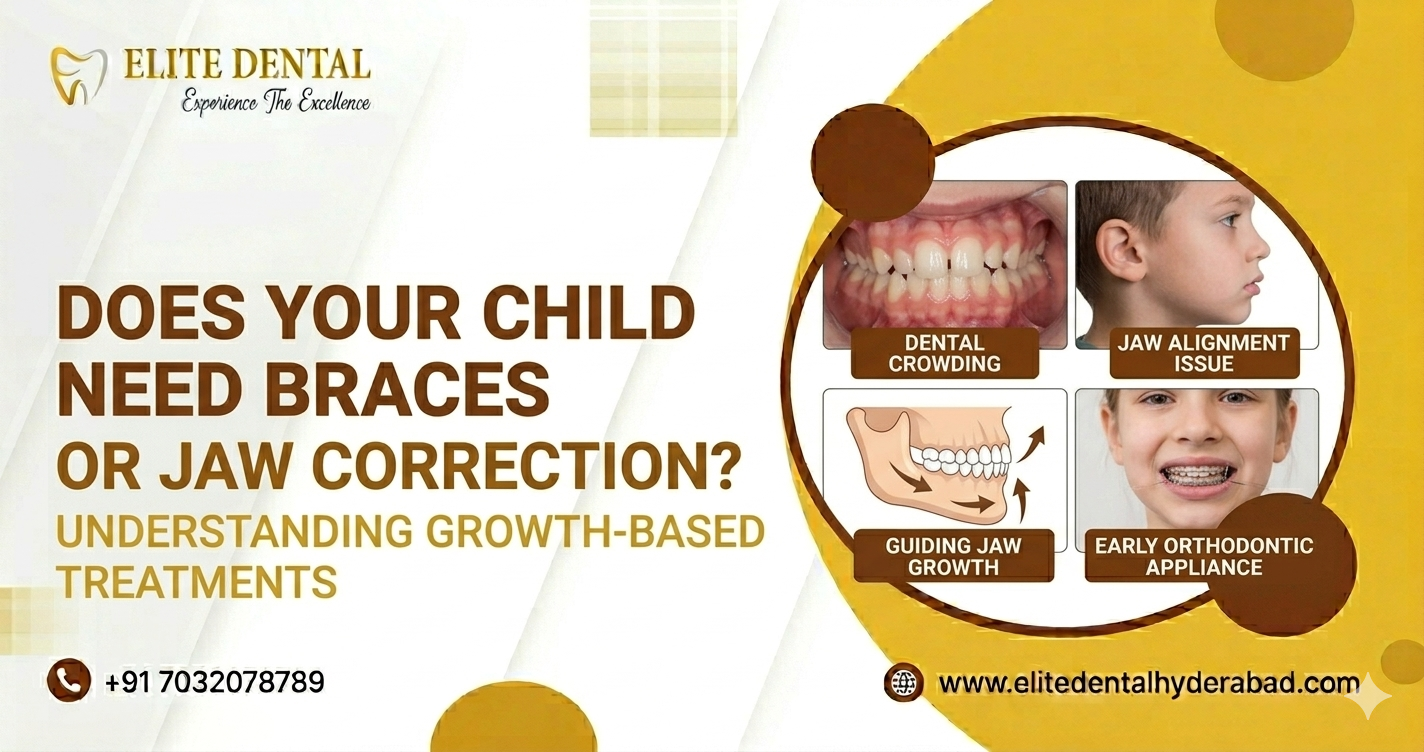
Does Your Child Need Braces or Jaw Correction? Understanding Growth-Based Treatments
As a parent, noticing that your child’s teeth look crooked or their bite seems “off” can be concerning. Many families assume braces are only for teenagers but modern orthodontics focuses heavily on early, growth-based treatments for kids braces and jaw correction. Understanding when and why your child might need braces can make a significant difference in their long-term dental health.
What Are Growth-Based Orthodontic Treatments?
Growth-based orthodontics focuses on guiding the natural development of a child’s teeth and jaw. Unlike adult treatments that simply move teeth, early interventions can shape jaw growth, improve bite alignment, and prevent complex problems later.
Children’s bones are still developing, which allows orthodontists to correct issues more effectively and often more comfortably than in adulthood.
Experts recommend that children have their first orthodontic evaluation by age 7, as this helps detect problems early and plan timely treatment.
Signs Your Child May Need Braces
Not every child needs braces, but there are some clear signs parents should watch for:
-
Crooked or crowded teeth
-
Early or late loss of baby teeth
-
Difficulty chewing or biting
-
Mouth breathing
-
Thumb sucking beyond age 5
-
Teeth that don’t meet properly (overbite, underbite, crossbite)
Braces for kids are commonly used to correct alignment issues and bite problems, improving both appearance and function.
When Is Jaw Correction Needed Instead of Braces?
Sometimes, the issue isn’t just the teeth it’s the jaw itself.
Jaw correction (also called orthopedic treatment) may be required if your child has:
-
A small or narrow upper jaw
-
A protruding lower jaw
-
Severe bite issues
-
Facial asymmetry
In such cases, orthodontists may recommend appliances like expanders or headgear, which help guide jaw growth. These devices apply gentle pressure over time to correct alignment while the bones are still developing.
Kids Braces vs Jaw Correction: What’s the Difference?
|
Treatment Type |
Purpose |
Best Age |
Focus Area |
|
Kids Braces |
Straighten teeth |
9–14 years |
Teeth alignment |
|
Jaw Correction |
Guide jaw growth |
6–12 years |
Bone structure |
|
Combined Treatment |
Both alignment + growth |
Varies |
Teeth + jaw |
In many cases, orthodontists use a combination of both for optimal results.
Benefits of Early Orthodontic Treatment for Kids
Choosing early treatment can offer several long-term advantages:
1. Prevents Severe Problems
Addressing issues early reduces the need for complex procedures later, such as tooth extractions or surgery.
2. Improves Facial Development
Jaw correction can enhance facial symmetry and overall appearance.
3. Better Oral Health
Straight teeth are easier to clean, reducing the risk of cavities and gum disease.
4. Boosts Confidence
A healthy smile can improve your child’s self-esteem during important developmental years.
5. Enhances Function
Orthodontic treatment improves chewing, speech, and breathing patterns.
Types of Braces for Kids
Modern orthodontics offers several options for kids braces:
-
Metal braces – Durable and effective
-
Ceramic braces – Less visible
-
Clear aligners – Removable and discreet (for older children)
Treatment duration typically ranges from 6 months to 3 years, depending on the severity of the problem.
What Happens During Growth-Based Treatment?
Here’s what you can expect:
-
Initial Consultation – Examination and X-rays
-
Diagnosis – Identifying teeth or jaw issues
-
Treatment Plan – Customized for your child
-
Appliance Placement – Braces or growth devices
-
Regular Checkups – Monitoring progress
-
Retention Phase – Maintaining results
Consistency and follow-ups are key to successful treatment outcomes.
Why Timing Matters in Kids Orthodontics
Delaying orthodontic care can make treatment more difficult and costly later. Early intervention allows orthodontists to:
-
Use natural growth to correct problems
-
Reduce treatment time in teenage years
-
Avoid invasive procedures
In fact, studies show that early orthodontic care can simplify future treatments significantly.
Choosing the Right Orthodontic Care for Your Child
When considering kids braces or jaw correction, it’s important to:
-
Visit a qualified orthodontist
-
Ask about growth-based treatment options
-
Understand the timeline and cost
-
Ensure your child is comfortable with the process
Clinics like Elite Dental Hyderabad focus on personalized pediatric orthodontic care, combining modern techniques with child-friendly approaches.
Final Thoughts
Deciding whether your child needs braces or jaw correction isn’t always straightforward—but early evaluation makes all the difference. Growth-based orthodontic treatments can guide proper development, prevent complications, and create a healthy, confident smile.
If you notice any signs of misalignment or bite issues, don’t wait. A simple consultation can set your child on the path to better oral health for life.
FAQs
1. What is the best age for kids braces?
Most children get braces between ages 9 and 14, but evaluation should happen by age 7.
2. How do I know if my child needs jaw correction?
If your child has bite issues, jaw imbalance, or facial asymmetry, an orthodontist may recommend growth-based treatment.
3. Are braces painful for kids?
Braces may cause mild discomfort initially, but modern techniques make the process much more comfortable than before.
4. How long does orthodontic treatment take for children?
Treatment usually lasts between 6 months and 3 years, depending on complexity.
5. Can jaw problems fix themselves as my child grows?
Some minor issues may improve, but most require professional guidance to prevent worsening.
6. Are clear aligners suitable for kids?
Clear aligners can work for older children with mild to moderate alignment issues.
7. Is early orthodontic treatment expensive?
Early treatment can actually reduce overall costs by preventing more complex procedures later.