


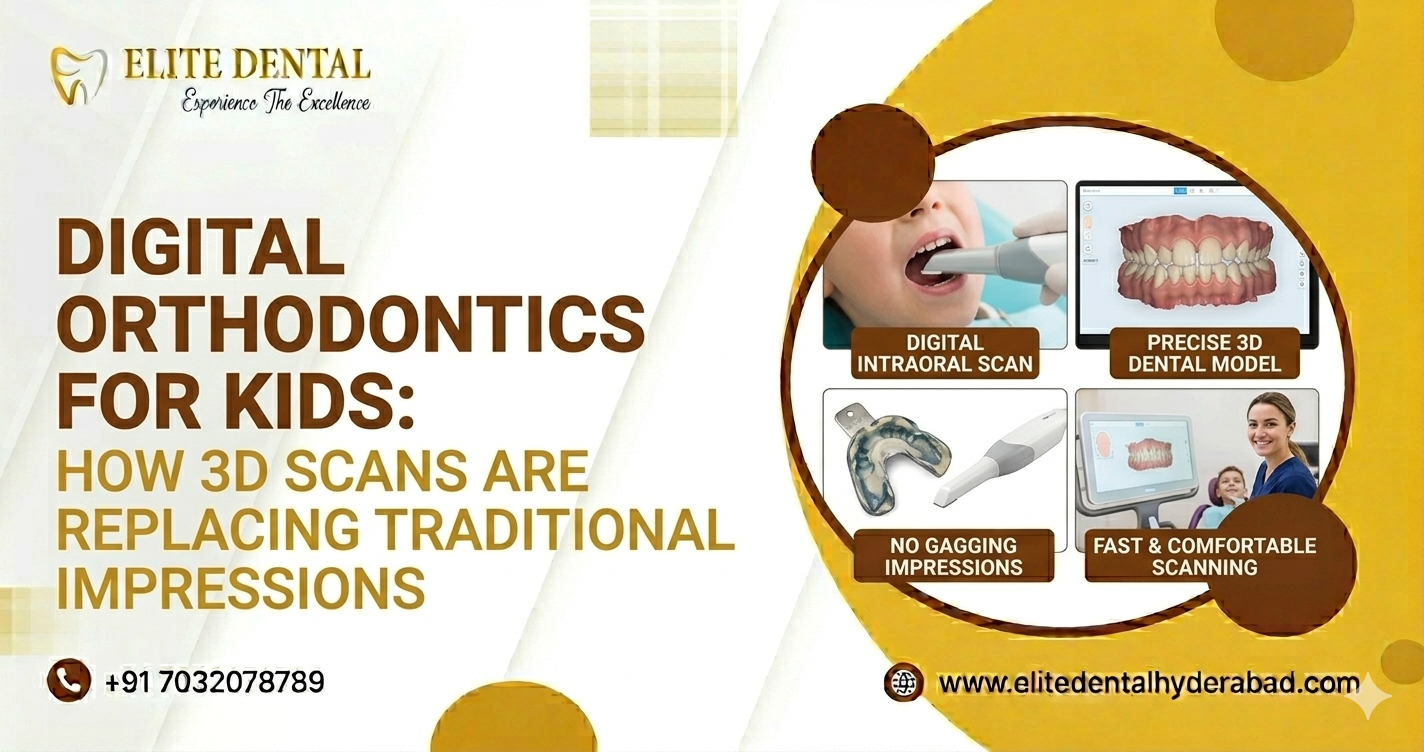
Digital Orthodontics for Kids: How 3D Scans Are Replacing Traditional Impressions
Orthodontic care for children has evolved significantly over the years. What once involved messy molds and uncomfortable procedures is now being replaced by advanced digital technology. One of the most important innovations in modern dentistry is digital orthodontics, particularly the use of 3D dental scans instead of traditional impressions.
If you’re a parent searching for kids braces, children orthodontics, or braces for kids near me, understanding this shift can help you make better decisions for your child’s dental health. This blog explains how 3D scans work, why they’re replacing traditional methods, and how they improve the overall orthodontic experience for children.
What Are Traditional Dental Impressions?
Traditional orthodontic impressions involve placing a tray filled with soft, putty-like material inside a child’s mouth. The child must bite down and remain still for several minutes until the material hardens.
While effective, this method has several downsides:
-
Uncomfortable and often triggers gag reflex
-
Messy and unpleasant for kids
-
Time-consuming
-
Prone to errors, requiring repeat impressions
For many children, especially those already anxious about dental visits, this process can be stressful.
What Is Digital Orthodontics?
Digital orthodontics uses advanced tools like intraoral scanners to capture precise images of a child’s teeth and gums. Instead of using molds, a small handheld device scans the mouth and creates a high-resolution 3D model on a screen.
These scanners capture thousands of images in seconds and convert them into a detailed digital impression. The result is a faster, cleaner, and far more comfortable experience.
Digital scanners have become a major part of modern orthodontic technology, offering improved accuracy and efficiency compared to traditional methods .
How 3D Scans Work for Kids’ Braces
The process is simple and child-friendly:
-
A dentist gently moves a small scanner wand inside the child’s mouth
-
The scanner captures real-time images of teeth and gums
-
Software converts these images into a 3D model instantly
-
The orthodontist uses this model to plan treatment
The entire process usually takes just a few minutes and is completely non-invasive and safe for children .
Why 3D Scans Are Better for Kids
1. More Comfortable Experience
One of the biggest advantages of digital scans is comfort. Children no longer need to deal with sticky materials or hold trays in their mouths.
Studies show that digital impressions are more comfortable and better accepted by young patients compared to traditional techniques .
2. No Gag Reflex or Anxiety
Traditional impressions often cause gagging and discomfort. Digital scanning eliminates this problem completely, making it ideal for younger children or those with dental anxiety .
3. Faster Appointments
Digital scans are incredibly quick. Most scans take less than 3 minutes, compared to longer traditional procedures.
This is especially helpful for busy parents searching for kids orthodontist near me who want efficient appointments.
4. Higher Accuracy
3D scans provide extremely detailed and precise images of teeth and bite alignment. This improves diagnosis and leads to better treatment planning.
Digital impressions eliminate common issues like air bubbles or distortions seen in traditional molds .
5. Better Treatment Outcomes
With improved accuracy, orthodontists can design more effective braces or aligners. This often results in:
-
Fewer adjustments
-
Reduced treatment time
-
Better final results
3D scanning has been shown to improve overall treatment efficiency and outcomes in orthodontics.
6. Real-Time Visualization for Parents and Kids
One of the most exciting features of digital orthodontics is the ability to see the results instantly.
Parents and children can:
-
View a 3D model of teeth
-
Understand dental issues clearly
-
See predicted treatment outcomes
This improves communication and builds confidence in the treatment plan.
Digital Orthodontics and Kids Braces
Modern orthodontic clinics now use digital scans for various treatments, including:
-
Metal braces for kids
-
Ceramic braces
-
Clear aligners (like Invisalign for teens)
-
Retainers and space maintainers
Digital scans ensure that these appliances fit perfectly, improving comfort and effectiveness.
Are 3D Dental Scans Safe for Children?
Yes, digital scans are completely safe.
They use light-based imaging technology and do not involve radiation or harmful materials. This makes them suitable for children of all ages .
Why Parents Prefer Digital Orthodontics
Parents searching for children braces, kids braces cost, or best orthodontist for kids are increasingly choosing clinics that offer digital technology.
Here’s why:
-
Less stress for children
-
Faster and cleaner procedures
-
Fewer repeat visits
-
Better understanding of treatment
Digital orthodontics creates a more positive experience for both kids and parents.
The Future of Kids Orthodontics
Digital technology is transforming orthodontics beyond just scanning. Today’s advanced clinics also use:
-
3D printing for custom appliances
-
AI-based treatment planning
-
Remote monitoring tools
These innovations make orthodontic care more precise, predictable, and convenient.
As technology continues to evolve, traditional impressions are becoming a thing of the past.
Choosing the Right Orthodontic Clinic for Your Child
When selecting an orthodontist, consider clinics that offer:
-
Digital 3D scanning
-
Pediatric-friendly environment
-
Customized treatment plans
-
Advanced orthodontic solutions
A modern clinic ensures your child receives comfortable and high-quality care.
Frequently Asked Questions (FAQs)
1. What age should a child get braces?
Orthodontists recommend an evaluation by age 7. Early assessment helps detect issues and plan timely treatment.
2. Are digital scans better than traditional impressions?
Yes, digital scans are more comfortable, faster, and more accurate, making them ideal for children.
3. How long does a 3D dental scan take?
Most scans take between 2 to 5 minutes, much quicker than traditional impressions.
4. Do digital scans hurt?
No, the process is completely painless and non-invasive.
5. Are digital orthodontic treatments more expensive?
In most cases, the cost difference is minimal. The improved accuracy and fewer repeat visits often make it more cost-effective in the long run.
6. Can digital scans replace all traditional impressions?
For most orthodontic treatments, yes. Digital scans have largely replaced traditional methods due to their efficiency and accuracy.