


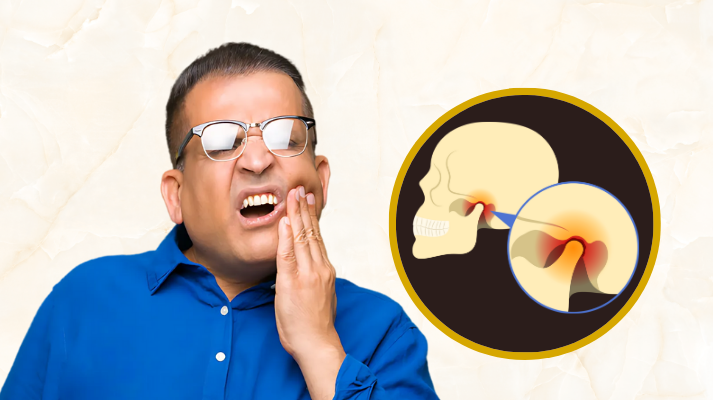
What is TMJ?
The temporomandibular joint (TMJ) is the joint that connects your jaw to your skull. It allows for the movement needed for talking, eating, and yawning. TMJ refers to the joint itself, while TMD (Temporomandibular Joint Disorder) encompasses various conditions that affect the TMJ and surrounding muscles.
Signs and Symptoms of TMD:
Here are the signs and symptoms of TMD:
- Jaw Pain and Discomfort:
Individuals with TMD may experience pain or softness in the jaw joint, often irritated by activities such as chewing or speaking.
- Difficulty or Discomfort While Chewing:
TMD can make chewing uncomfortable, leading to difficulty or pain when biting down on food.
- Clicking or Popping Sounds:
Clicking, popping, or grating sounds when moving the jaw may indicate issues with the TMJ.
- Limited Jaw Movement:
TMD can result in limited jaw movement or locking, making it challenging to open or close the mouth fully.
- Ear Pain or Fullness:
Some individuals with TMD may experience ear pain, a feeling of fullness, or ringing in the ears.
- Facial Pain or Headaches:
Pain or headaches, often resembling tension headaches, may be associated with TMD.
Prevention:
While not all cases of TMD can be prevented, there are measures individuals can take to reduce the risk of developing or damaging TMD symptoms:
- Practice Good Posture:
Maintaining good posture can help to reduce pressure on the jaw and surrounding muscles.
- Avoid Excessive Jaw Movement:
Limit activities involving excessive or repetitive jaw movement, such as chewing gum or biting hard objects.
- Manage Stress:
Stress can contribute to jaw teeth grinding, a common trigger for TMD. Stress management techniques can be beneficial.
- Use Proper Ergonomics:
Ensuring proper ergonomics for those working on computers can prevent neck and jaw strain.
- Maintain a Balanced Diet:
Consuming a diet that is easy to chew and includes a variety of nutrients can support overall jaw health.
Treatments for TMD:
Here are the treatment options for TMD:
- Pain Management:
Over-the-counter or prescription medications are suggested to manage pain and inflammation.
- Oral Appliances:
Customized oral appliances, such as mouthguards, can help to reduce TMD symptoms by repositioning the jaw.
- Physical Therapy:
Physical therapy techniques, including jaw exercises and stretches, can improve jaw mobility and reduce muscle tension.
- Stress Management:
Stress reduction techniques, like relaxation exercises or counseling, can be beneficial in managing TMD symptoms.
- Orthodontic Treatment:
In some cases, orthodontic treatment are recommended to correct bite issues contributing to TMD.
Our commitment to providing effective and compassionate care makes Elite Dental the preferred destination for TMJ treatment in Kondapur. If you are experiencing symptoms of TMD, trust our experienced dentist. Your comfort is our priority.